Interesting Ideas

From the WWW of RSS
Death of an Ordinary Man by Sarah Perry audiobook review – an extraordinary chronicle of terminal illness

Death of an Ordinary Man by Sarah Perry audiobook review – an extraordinary chronicle of terminal illness

Fiona Sturges on Books | The Guardian

The author’s father-in-law died just nine days after his cancer diagnosis, inspiring this moving and sharply observed account of his last days

Novelist Sarah Perry’s memoir of her late father-in-law, David, chronicles the period from his first signs of illness, when he began to have trouble swallowing, to his diagnosis of oesophageal cancer, to his death at the age of 77 just nine days later.

We first meet David, a retired chemist from Norwich, on a day trip with Perry and her husband in the summer of 2022. The three of them have gone to Great Yarmouth where, seemingly in good health, David gleefully eats four hot doughnuts. She reveals him as an unassuming man who lives in a bungalow, drinks Yorkshire Tea, delights in telling bad jokes, and likes doing sudoku and watching Antiques Roadshow on TV. But right at the start, Perry notes that David’s death was only weeks away. Though his illness was mercifully short, the speed at which it progressed caught his family unawares, leaving precious little time to prepare.

Continue reading...

Read More
The best books of 2025

The best books of 2025

on Books | The Guardian

New novels from Chimamanda Ngozi Adichie and Ian McEwan, plus the return of Slow Horses and Margaret Atwood looks back … Guardian critics pick the must-read titles of 2025

The Guardian’s fiction editor picks the best of the year, from Chimamanda Ngozi Adichie’s Dream Count to Thomas Pynchon’s return, David Szalay’s Booker winner and a remarkable collection of short stories.

Continue reading...

Read More

Editors' Choice 2025: The BookBrowse Team's Top Picks

on BookBrowse Blog

Our upcoming annual Top 20 list will show subscribers’ favorite books of the year, but in the meantime, we thought you might enjoy knowing about our favorites. So, for the first time ever, each member of the BookBrowse editorial team shared a top pick of 2025 along with some runners-up to create our own loosely structured "best of" list. Unsurprisingly, we found there was a lot of overlap between the books we featured in our digital magazine this year and the ones we chose here, though this overlap wasn’t complete. (What we feature depends on a variety of factors, including prepub reviews and the books individual reviewers decide to cover.) Here’s your chance to get a glimpse of our personal tastes and an inside look at Bo... [More]

Read More

One great poem to read today: Tracy K. Smith’s “Don’t You Wonder, Sometimes?”

Emily Temple on Literary Hub

This April marks the 30th iteration of National Poetry Month, which was launched by the Academy of American Poets in April 1996. To celebrate, the Literary Hub staff will be recommending one great poem to read every (work) day of

Read More

Reading and Publishing Predictions: Book Trends to Watch for in 2026

on BookBrowse Blog

What will happen in the book world in 2026? Which genres will be popular? Which reading and publishing trends will continue or fall off? What do readers and book clubs need to know going into the new year? Let us be your crystal ball. Here are some predictions we have for 2026, including what will happen with historical fiction, BookTok, audiobooks, book bans, book club content, and more.

[More]

Read More

No New York by Adele Bertei review – a vivid, vibrant, musical coming of age

No New York by Adele Bertei review – a vivid, vibrant, musical coming of age

Priya Elan on Books | The Guardian

1970s and 80s New York are viscerally evoked in this potent memoir of the ‘no wave’ scene

You won’t necessarily have heard of Adele Bertei: she was a member of experimental jazz-punk band the Contortions from 1977 and recorded the pop-house single Build Me a Bridge. But her memoir is an essential slice of New York’s bohemian pizza pie, and works in part because she is a relative unknown, not weighed down by her own cultural baggage.

Following a troubled, itinerant upbringing, she arrives in Manhattan in 1977 to find a city on its knees. The big apple was in the red, both literally (fires were a regular occurrence) and monetarily (there was a municipal debt crisis). But pre-Aids and post-Warhol’s avant garde grip, it was also a place that was creatively open.

Continue reading...

Read More

Our Best 2025 Book Club Discussions & First Impressions Features

on BookBrowse Blog

Besides getting access to our digital magazine and a wealth of archived content, BookBrowse members can take part in our First Impressions reader review program and book club discussions year-round. In 2025, we discussed or will discuss more than 35 books in our community forum, and we featured nearly 50 titles in First Impressions. Below, we look at some of the books that generated the most enthusiastic and intriguing discussion and that were the most highly rated and positively reviewed. We hope you enjoy browsing through them and find some perfect picks for your TBR or your own book club discussion list.  We also invite you to follow along with or contribute to our discussions and First Impressions reviews in 2026. Members can requ... [More]

Read More
Sarah Hall: ‘Everyone wangs on about Anna Karenina – I’ve never been able to finish it’

Sarah Hall: ‘Everyone wangs on about Anna Karenina – I’ve never been able to finish it’

Sarah Hall on Books | The Guardian

The author on being inspired by Michael Ondaatje and how Hilary Mantel helped her overcome her aversion to historical figure novels

My earliest reading memory
The headteacher in my village primary school used to recount terrifying Cumbrian ghost tales to the class, which I’m sure was formative. I can also still hear my mum sing-songing rhymes; “Oranges and lemons, say the bells of St Clement’s”. My dad read the Ant and Bee books to me, repeatedly – he’d drive back over a high upland road from work and get home in time for bedtime stories. But my earliest independent reading memory is The Story of Ferdinandby Leaf and Lawson. I loved that bull!

My favourite book growing up
Big books gave me the whirlies so it took a while for them to start landing.

Continue reading...

Read More

“Horror Movie Where We Survive,” a Poem by Maya Salameh

Maya Salameh on Literary Hub

you waltz through the bouquet of zombies outside the Albertson’s, skip pristine sneakers over frankenstein feet. the dead woman’s gown is hissing, but it doesn’t matter. whatever happens next the annals will conjugate. wear your most expensive shoes, the dress

Read More

In Praise of the Old WASP Elite (Because Dignified Hypocrisy is Better Than Garish Cruelty)

Robert Leleux on Literary Hub

Lately, I’ve found myself pining for the old WASP elite. Do admit, we used to have a better class of rich people. I mean, you’d never have seen Paul Mellon prancing around a stage in Wisconsin with a block of

Read More
Transcription by Ben Lerner review – a stunning exploration of technology and storytelling

Transcription by Ben Lerner review – a stunning exploration of technology and storytelling

Sukhdev Sandhu on Books | The Guardian

Ranging from quantum mechanics to eating disorders to the nature of fiction, this is a breathtaking interrogation of family, connection and memory

Transcription ends with an epilogue. It’s a letter, or at least an extract from a letter, written by Leopold Blaschka, a 19th-century Bohemia-born artist who, with his son Rudolf, crafted intricate and breathtakingly realistic models of flowers, plants and sea creatures made out of glass. So astounding was their technique, so uncanny, that sceptics assumed they must be using secret devices. “It is not so,” he insisted. “We have the touch. My son Rudolf has more than I have because he is my son and the touch increases in every generation.” Until this point, Blaschka hasn’t been referenced by name even once. But here, in coda form, is the essence of Transcription, a novel about touch, devices and familial inheritances that is itself intricate, uncanny, sometimes breathtakingly realistic.

It begins with a middle-aged American narrator travelling to Providence, Rhode Island, home to Brown University, where Ben Lerner studied poetry and political theory as an undergraduate. He is there to conduct a magazine interview with a polymathic German intellectual named Thomas. No ordinary assignment: Thomas was his mentor at college, the father of his friend Max, and now, at the age of 90, this conversation is expected to be his last will and testament. At the hotel, bathos strikes – the narrator drops his smartphone in a sink; it’s unusable and he’s too embarrassed to confess. Thomas soon gets into his conversational stride, but his rich sentences go unrecorded.

Continue reading...

Read More
The Palm House by Gwendoline Riley review – the laureate of bad relationships

The Palm House by Gwendoline Riley review – the laureate of bad relationships

Clare Clark on Books | The Guardian

Riley has always skewered cruelty with shattering exactitude. What’s new in this story of two old friends in London is the delicacy she brings to moments of tenderness

In the opening pages of The Palm House, London is enveloped in a dust storm blown up from the Sahara. As old friends Laura and Putnam meet for a drink in a Southwark pub, a packet of crisps open between them, the occluded atmosphere renders the city unsettlingly strange: the sky is “dark yellow … like iodine”, while the pictures in the evening paper show a “blood red sun”, a “jaundiced” City square, a “prodigious cloud, menacing the Shard”.

Like a Saharan dust storm, Gwendoline Riley’s work recasts our relationship with the familiar, transforming ordinary, unremarkable lives of her characters into something startling and new. Her female protagonists, often writers themselves, struggle with bad relationships: in First Love, shortlisted for the 2017 Women’s prize, Neve grapples with an abusive marriage, while Bridget in 2021’s quietly brutal My Phantoms is caught up with her desperately self-involved mother. The mothers in Riley’s novels are mostly monstrous and persistent, the fathers mostly monstrous and dead. Her stories are not structured around linear plots – nothing much happens – but Riley’s disquieting acuity and her spare and unsparing prose makes them shimmer with tension. She has a phenomenal ear for dialogue, for the myriad ways in which people unknowingly lay themselves bare, both in what they say and, more agonisingly, in what they don’t – or can’t. She is the laureate of disconnection, her bone-dry humour edged with the vertiginous lurch of despair.

Continue reading...

Read More
Original Sin by Kathryn Paige Harden review – are criminals born or made?

Original Sin by Kathryn Paige Harden review – are criminals born or made?

Sophie McBain on Books | The Guardian

A psychologist delves into the genetics of bad behaviour in a book littered with fascinating scientific findings

In 2021, the psychologist and writer Kathryn Paige Harden co-authored a paper outlining her research into the genetic patterns linked to a higher risk of developing substance abuse problems or engaging in risk-taking behaviour, such as having unprotected sex or committing crime. The paper referred to the genetics of “traits related to self-regulation and addiction”, but Harden thought of herself as studying the genetics of sin.

Harden is a professor at the University of Texas and the author of a previous book, The Genetic Lottery, on how our knowledge of genetics should shape our views on meritocracy. She once received a letter from a man who has been in prison since he was 16 for kidnapping and sexually assaulting a woman. “What would drive a boy to do such a thing?” he asked her. Her new book is a heartfelt, subtly argued response to his question, an attempt to outline how our expanding knowledge of what makes people do bad things – the interplay of our inherited tendencies and our life circumstances – should influence how we assign moral responsibility and blame.

Continue reading...

Read More
JD Vance announces a new memoir about his conversion to Catholicism

JD Vance announces a new memoir about his conversion to Catholicism

Emma Loffhagen on Books | The Guardian

The vice-president’s follow-up to Hillbilly Elegy is announced as speculation builds over a 2028 run to succeed Trump

US vice-president JD Vance has announced a new memoir centred on his conversion to Catholicism, adding to mounting speculation about a potential 2028 presidential run.

The book, titled Communion: Finding My Way Back to Faith, will be published on 16 June by HarperCollins and is described as “a spiritual exploration of what it means to be a Christian across the seasons of Vance’s life”.

Continue reading...

Read More

The Corrections is finally coming to Netflix.

Brittany Allen on Literary Hub

Jonathan Franzen’s The Corrections, the seismic family saga you couldn’t avoid in the early aughts, is finally getting a screen adaptation. In 2012, Noah Baumbach and Scott Rudin attempted to lasso that late modernist moon for a much-hyped HBO mini-series

Read More

The America 250 Challenge: 26 Books for Reading US History in 2026

on BookBrowse Blog

This year, 2026, marks the 250th anniversary of the United States—in other words, 250 years of American history. In case you hadn’t noticed, at BookBrowse, we love historical fiction, and historical nonfiction, too. So here we present a challenge of sorts: read 26 books this year, each providing a glimpse into life in a different decade of the past two and a half centuries—using our list below as is, or swapping out for your own picks. These titles are all ones we’ve recommended and featured, and you can supplement your reading and book club discussions with our reviews, “beyond the book” articles, reading guides, and other content. We acknowledge that it is a difficult time for many to engage with Ameri... [More]

Read More
The best recent poetry – review roundup

The best recent poetry – review roundup

Kit Fan on Books | The Guardian

Goyle, Chert, Mire by Jean Sprackland; The House of Broken Things by Kim Moore; The Tree Is Missing by Shannon Kuta Kelly; Dog Star by Michael Symmons Roberts; Horses by Jake Skeets

Goyle, Chert, Mire by Jean Sprackland (Jonathan Cape, £13)
The 45 unrhymed sonnets in Sprackland’s sixth collection coalesce into three spellbinding interwoven sequences. Set in the Blackdown Hills, a remote stretch between Somerset and Devon, the poems explore the friction between art and articulation, habitat and inhabitation. Here, the landscape is not a backdrop but a linguistic event: “a drop swells on the lip of a leaf and falls / like a word being said”. By removing the first person throughout, Sprackland makes us encounter the landscape intimately: it’s not mediated through a speaker’s interiority but in “mossy silence”, “the rumble of the combine harvester”, “the noise / of meltwater hurtling over stones”, or “the shattered pieces of yourself”. Overshadowed by an unnamed illness, the poems bear wounds but don’t broadcast suffering; this restraint fosters minute attention to “pilgrim gnats attending the water” and the mire’s “long translation from gley to peat”. Sprackland’s ability alternately to narrow and widen our focus – from a closeup on insect life to geological time – reveals how consciousness itself moves between scales. Unlike many nature poems that overanimate or sentimentalise, the book is alive to the limits of human agency: it knows “language itself is prone to collapse”. Yet in that collapse, we can find meaning; recognise the “spiky logic” of natural process, following it as “the sparrow enters / and follows” the “sprawling holly”. The unwavering sonnet form represents an act of courage, a disciplined response to illness and dissolution, creating order where language threatens to collapse. This is a profound, enduring collection.

The House of Broken Things by Kim Moore (Corsair, £14.99)
Moore’s new collection constructs an ambitious architecture for exploring intergenerational trauma and motherhood. At its best, we find her confessional signature, as in The Black Notices, cataloguing unidentified murdered women, or Giving Birth With Anne Sexton, where literary inheritance meets bodily terror. Sometimes, however, this commitment to sincerity and transparency results in poems that feel like pedagogic exercises: Damaged Cento catalogues the “eight stages” of domestic homicide, while The Trimesters documents pregnancy’s upheavals. The motherhood poems, though deeply felt, risk predictability in their exploration of well-trodden territory – breastfeeding, bedtime routines, and the spectre of parental loss (“I imagine someone taking her away, / or a car ploughing into the pram”). It’s technically hard to make this new. Moore clearly presents the “I” as a site of shared, unpolished vulnerability, prioritising emotional legibility over lyric innovation.

Continue reading...

Read More
Monsters in the Archives by Caroline Bicks review – the writing secrets of Stephen King

Monsters in the Archives by Caroline Bicks review – the writing secrets of Stephen King

Kathryn Hughes on Books | The Guardian

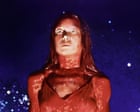
A deep dive into the horror novelist’s archives reveals pedantry, penny-pinching, and a total redraft of Carrie

When Caroline Bicks first met Stephen King she was worried. As a teenager she had scared herself silly with his books – Carrie and The Shining were the two that crept under her skin and refused to budge – but now she found herself in the odd position of being Stephen E King professor at the University of Maine. King had endowed the chair at his alma mater in 2016 for the study of literature, and Dr Bicks was a Harvard-trained Shakespeare specialist. What, beyond a name, would they really have in common?

At the time of her appointment, Bicks’s employers had told her not to initiate contact with the famous author in any way. But four years into the job she got a phone call from “Steve” who turned out to be a teddy bear: “I couldn’t believe it. The man responsible for terrifying generations of readers – including me – was so … nice.” Not quite a meet-cute, but promising.

Continue reading...

Read More

How PayPal and Other Platforms Help Silence Alternative Media

Rainey Reitman on Literary Hub

“We were punished.” That’s how Joe Lauria, the editor in chief of Consortium News, described PayPal’s decision to cut off their account. Lauria has spent decades writing about international affairs, with the bulk of his career working as United Nations

Read More
Muskism by Quinn Slobodian and Ben Tarnoff review – how Elon Musk is reshaping the world

Muskism by Quinn Slobodian and Ben Tarnoff review – how Elon Musk is reshaping the world

Christopher Webb on Books | The Guardian

Henry Ford changed the face of industry forever – what kind of economic model do Musk’s methods presage?

Genius industrialist or clownish conman, humanity’s saviour from a rapidly crumbling planet or rabid social media troll – the verdicts on the world’s richest person vary in flavour, but most share something in common: they focus on Musk as an individual. In their study, Quinn Slobodian, a historian at Boston University, and Ben Tarnoff, a tech writer, wish to reframe the conversation. The most important question, they argue, is not “who is Musk?” but “what is Musk a symptom of?”

As the title suggests, their answer is “Muskism”, the coinage a deliberate nod to Fordism, the shorthand for 20th-century capitalism built on the pairing of mass production with mass consumption. If Fordism was the last century’s operating system, Slobodian and Tarnoff contend that Muskism is this century’s.

Continue reading...

Read More
A Rebel and a Traitor by Rory Carroll review – the extraordinary story of Roger Casement

A Rebel and a Traitor by Rory Carroll review – the extraordinary story of Roger Casement

Oliver Bullough on Books | The Guardian

A journalist tells the improbable tale of a British diplomat who worked to free Ireland – and paid the ultimate price

Roger Casement had a life that defies categorisation: an imperial administrator who exposed imperial atrocities; a one-time diplomat for the United Kingdom who enlisted German help in Ireland’s fight for freedom; a closeted gay man who left detailed records of his sexual adventures; a knight of the realm convicted of conspiring against the crown.

TE Lawrence (“of Arabia”), himself no stranger to the hypocrisy of British imperialism and the difficulties of illegal sexuality, called Casement a “broken archangel”. Rory Carroll, the Guardian’s Ireland correspondent, retains some of that poetry in this deeply researched and fascinating account of Casement’s role in the creation of the Irish state.

Continue reading...

Read More

Lit Hub Daily: April 3, 2026

Lit Hub Daily on Literary Hub

“Lately, I’ve found myself pining for the old WASP elite.” In which Robert Leleux reads too many biographies of rich, white Americans. | Lit Hub Biography Simon Morrison explores the ex-pat life in Moscow after the collapse of Soviet communism.

Read More

This week’s news in Venn diagrams.

James Folta on Literary Hub

It’s April on the east coast, and we’re starting to get glimpses of beauty amid the chilled damp. Everyone knows Eliot’s description of April as the cruelest month: “Memory and desire, stirring/Dull roots with spring rain.” I feel you, brother.

Read More

Living the Ex-Pat Life in Moscow at the End of the Soviet Empire

Simon Morrison on Literary Hub

Russia (Rossiya) has never been called Russia, not officially. It’s been the Tsardom of Russia, Imperial Russia, Soviet Russia, and the Russian Federation but never just Russia. That place doesn’t exist, except in the imagination, in a dreamscape of crime

Read More
This month’s best paperbacks: David Szalay, Han Kang and more

This month’s best paperbacks: David Szalay, Han Kang and more

Guardian Staff on Books | The Guardian

Looking for a new reading recommendation? Here are some wonderful new paperbacks, from a Booker-winning tale of one man’s life to a gossipy account of the golden age of magazines

Continue reading...

Read More

Dylan Landis on How Writing Her Rainey Royal Series Saved Her Life

Dylan Landis on Literary Hub

Rainey Royal saved my life. It was 2011, the year I cried every day. My husband and I had just moved to New York City from Washington, DC, and for a long time we lived out of wardrobe boxes in

Read More

Our Best Beyond the Book Articles of 2025

on BookBrowse Blog

At BookBrowse, we’re all about bringing you great reading, period. That’s why we don’t only feature reviews of recommended books, but also “beyond the book” articles, bite-sized literary and cultural pieces that expand on an aspect of each featured title. These articles can be read on their own, but also serve as a fantastic entry point into the related book. Below, we’ve selected some of the best articles written by our reviewers this year, one from each of our nine categories. These span subjects ranging from Ukraine’s national soil to American political lawn signs, crime dioramas created by “the mother of forensic science,” Mariah Carey’s career, how author Siphiwe Gloria Ndlovu... [More]

Read More
What we’re reading: writers and readers on the books they enjoyed in March

What we’re reading: writers and readers on the books they enjoyed in March

Guardian Staff on Books | The Guardian

John Lanchester, Patmeena Sabit and Guardian readers discuss the titles they have read over the last month. Join the conversation in the comments

I find it hard to read contemporary fiction while I’m in the middle of writing a novel, so I use the time after finishing as an opportunity to catch up. I hugely enjoyed two British novels, Drayton and Mackenzie by Alexander Starritt, about friendship and business, and The New Life by Tom Crewe, about gay life in the 1890s. European fiction: Eurotrash by Christian Kracht is a funny novel about going on a road trip with a deranged parent; Perfection by Vincenzo Latronico is about the horrible life of digital nomads; Drive Your Plow Over the Bones of the Dead by Olga Tokarczuk is an unclassifiable, riveting sort-of mystery.

Continue reading...

Read More
Lázár by Nelio Biedermann review – a Hungarian epic from a 22-year-old author

Lázár by Nelio Biedermann review – a Hungarian epic from a 22-year-old author

Marcel Theroux on Books | The Guardian

The fortunes of a single family are entwined with the turmoil of the 20th century in this ambitious, gothic-inflected debut

This gothic-inflected saga has received much attention in Europe for its quirky and confident take on 20th-century Hungarian history. It is sobering to reflect that its author not only has no personal memory of the end of communist rule in eastern Europe, but that he wasn’t even alive when the twin towers fell. Born in 2003, Nelio Biedermann is among the first wave of gen Z writers of fiction and Lázár is his debut novel.

The opening pages introduce us to a world straight out of gothic fable. In an isolated manor house by a forbiddingly dark forest, a strange-looking baby is born. This unearthly child, Lajos, is fated to carry forward the family name of the Lázárs, a noble dynasty with an alarming tendency to go mad, die violently, or both. Meanwhile, in another wing of the house lurks the baron’s older brother, Imre, who is barred from the baronetcy by reason of insanity.

Continue reading...

Read More

Is JD Vance stealing his book titles from bell hooks?

Brittany Allen on Literary Hub

As the internet noted earlier this week—and Claire Guinan at Jezebel observed yesterday—Vice President JD Vance may have a plagiarism problem. (Among his many others.) On Tuesday, the man with the most hillbilly blood on his hands announced a new

Read More